
U.S. Moves Military Assets From Asia Amid Iran War, Raising Concerns Among Allies
Shibbir Ahmed প্রকাশিত: ২২ আগস্ট, ২০২৬, ০৮:০৮ এএম
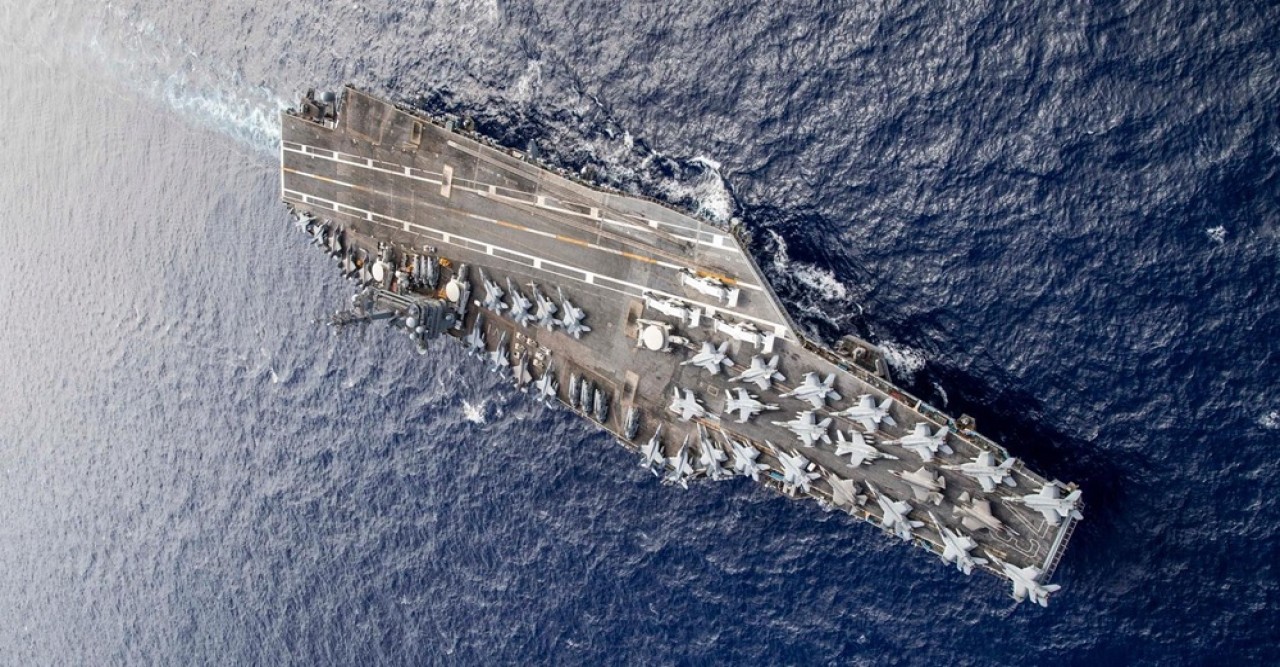
Shibbir Ahmed, Washington, D.C.: As the war with Iran continues to drag on, the growing demand for U.S. military forces in the Middle East is prompting Washington to move some key military assets from the Asia-Pacific region. The development has raised fresh concerns among U.S. allies in Asia about Washington’s military capabilities and deterrence strategy toward China and North Korea.
One of the most significant recent developments is the deployment of the U.S. aircraft carrier USS George Washington, which had been stationed in Japan, to the Middle East. The carrier is expected to replace the USS Abraham Lincoln, which has been involved in operations related to the Iran war for an extended period. The move will temporarily leave the Western Pacific without a U.S. aircraft carrier.
As the conflict between the United States and Iran approaches the six-month mark, pressure on U.S. military resources in the Middle East is also increasing. The decision to send the George Washington to replace the Abraham Lincoln, which has spent an extended period at sea, is being viewed as a reflection of that growing pressure.
Concerns Growing in Asia
U.S. allies in Asia are particularly concerned about the military redeployment. Their concern is that shifting military assets to the Middle East could temporarily weaken the United States’ ability to deter China in the Indo-Pacific region.
China’s military power has been expanding rapidly, particularly in the Western Pacific. As a result, the absence of a U.S. aircraft carrier from the region has raised new questions about the military balance. However, most U.S. military forces remain in Asia, and the current moves are not being viewed as a permanent withdrawal from the region.
New Questions Over North Korea
The military repositioning comes at a sensitive time, as North Korea has launched approximately 10 short-range ballistic missiles. At the same time, the Trump administration has reduced the scope of joint military exercises between the United States and South Korea, with the exercise ending six days earlier than originally scheduled.
While Washington is seeking to reopen the possibility of negotiations with North Korean leader Kim Jong Un, the Iran war is simultaneously forcing the United States to reassess the deployment of its military assets in Asia. The developments have prompted renewed discussions about the long-term U.S. defense commitment to allies such as South Korea and Japan.
Is the Situation Creating an Opportunity for China?
For analysts, one of the most important questions is how a prolonged conflict in the Middle East could affect the United States’ broader Indo-Pacific strategy. The United States is facing pressure on its military resources as it attempts to address security challenges involving Iran, China, North Korea and other potential threats simultaneously. Concerns have also emerged over U.S. stocks of weapons and missile-defense systems.
Meanwhile, the Pentagon is also reviewing the possibility of reducing or restructuring the U.S. military presence in the Persian Gulf after the Iran war ends. However, no final decision has been made on the matter.
Overall, the Iran war is not only changing the military balance in the Middle East; it is also having implications for U.S. global military strategy. With key military assets being shifted from Asia to the Middle East, a major question now facing Washington is whether the United States can maintain the same level of military presence and deterrence on both fronts—the Middle East and the Indo-Pacific.