
Trump Labels Strait of Hormuz ‘New U.S. Territory’ as Iran Rejects Claim
Shibbir Ahmed প্রকাশিত: ১৯ আগস্ট, ২০২৬, ০৯:০৮ পিএম
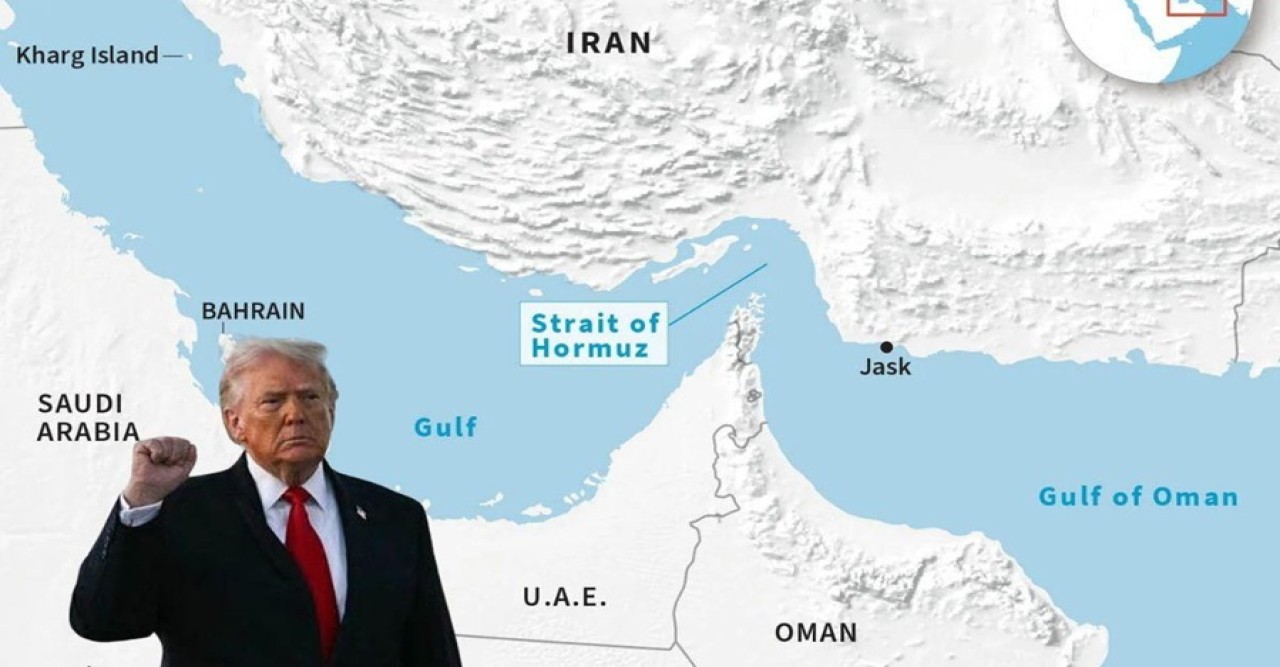
Shibbir Ahmed, New York: U.S. President Donald Trump has posted a map on social media labeling the strategically important Strait of Hormuz as “New U.S. Territory,” escalating an already tense confrontation with Iran over the vital shipping route.
Trump shared the map on his Truth Social account on Tuesday, August 18, without providing additional explanation. The post came days after he said he intended to declare the Strait of Hormuz a U.S. territory.
The move immediately drew a sharp response from Tehran. Iranian Deputy Foreign Minister Kazem Gharibabadi dismissed Trump's claim as a “delusion” and warned that it would either be corrected or challenged by Iran.
The dispute comes as the United States and Iran remain locked in a confrontation over the future of the waterway, which is one of the world's most important energy and shipping corridors.
Trump Doubles Down on Hormuz Claim
Trump had first suggested last week that the United States could take control of the Strait of Hormuz. On Monday, he told reporters at the White House that making the waterway part of the United States was, in his words, a “great idea.”
His latest social media post went a step further by displaying a map with the strait marked as “New U.S. Territory.”
The Strait of Hormuz lies between Iran and Oman and connects the Persian Gulf with the Gulf of Oman and the Arabian Sea. It is a critical passage for global energy shipments.
Trump's move has raised questions about the legal and diplomatic implications of any attempt by Washington to claim sovereignty over the waterway.
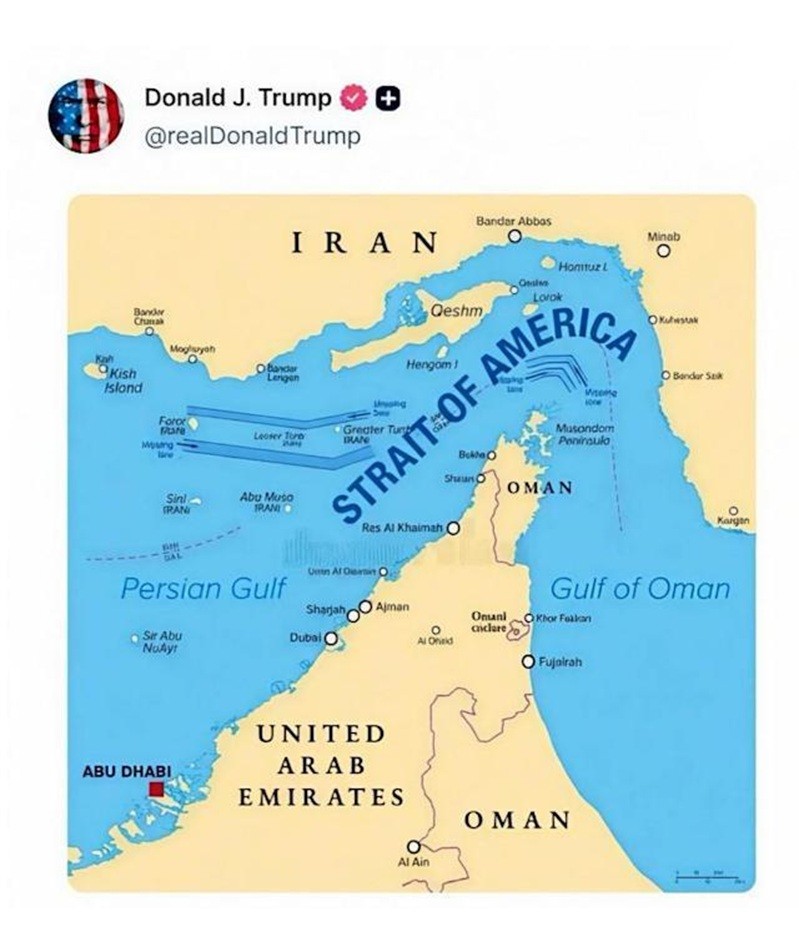
International law recognizes territorial waters in the Strait as belonging to the coastal states, principally Iran and Oman. A U.S. declaration alone would not establish American sovereignty over the waterway.
Iran Rejects Trump's Claim
Iran has strongly rejected Trump's statements about the strait. Iranian Deputy Foreign Minister Kazem Gharibabadi responded directly to Trump's map, calling the U.S. president's claim a “delusion.”
He said the claim would either be corrected or that Iran would take steps to correct what he described as Trump's mistaken view. Iranian officials have repeatedly insisted that the Strait of Hormuz remains under the control and sovereignty of the countries bordering it.
Iranian Parliament Speaker Mohammad Bagher Ghalibaf said Tuesday that the strait would remain closed until the United States accepts Tehran's demands. Those demands include lifting the U.S. blockade, releasing frozen Iranian assets, ending the oil embargo and stopping military operations against Iran.
Trump Says No Talks Are Underway
Trump's territorial claim came at the same time as he said there were no negotiations currently taking place with Iran. In a Truth Social post Tuesday, Trump said there were “no talks or conversations” underway or scheduled with Tehran and declared that the U.S. naval blockade remained in force.
The statement appeared to contradict reports from the previous day suggesting that back-channel contacts between U.S. and Iranian officials had taken place. The breakdown in diplomacy comes after a 60-day negotiating period failed to produce a comprehensive agreement between Washington and Tehran.
A Strategic Global Waterway
The Strait of Hormuz is one of the most strategically important waterways in the world. Approximately one-fifth of global oil shipments pass through the strait, making any prolonged disruption a major threat to international energy markets and global economic stability.
Shipping through the waterway has already fallen sharply because of the conflict and security concerns. Major shipping companies have avoided the route, while insurers and energy traders face growing uncertainty over whether commercial vessels can safely transit the area.
A vessel was also reportedly struck by an unknown projectile while transiting the Strait of Hormuz on Tuesday, according to an alert from the United Kingdom Maritime Trade Operations center. The incident caused damage to the vessel's engine room and resulted in a crew casualty.
Iran Strikes Back With California Map
Iran responded to Trump's provocative map with a provocative image of its own. An official Iranian social media account associated with Iran's consulate in Hyderabad posted a map of the United States highlighting California and labeling it “NEW TERRITORY OF ISLAMIC REPUBLIC OF IRAN.”
The post appeared to be a direct satirical response to Trump's depiction of the Strait of Hormuz as U.S. territory. California is also home to a large Iranian-American community. The exchange of maps underscores the increasingly confrontational rhetoric between Washington and Tehran.
What Would a U.S. Territorial Claim Mean?
Trump's post does not itself change the legal status of the Strait of Hormuz. The waterway passes through territorial waters associated with Iran and Oman, and its international navigation regime is governed by international maritime law.
Any attempt by the United States to formally claim sovereignty over the strait would therefore have major legal and diplomatic consequences and could trigger opposition from Iran, Oman and other regional states. The dispute also risks complicating efforts to keep one of the world's most important shipping routes open to international commerce.
Regional Tensions Continue to Rise
The confrontation is also placing pressure on U.S. relations with other Gulf countries. The United Arab Emirates announced Wednesday that it had suspended financial and economic transactions with Iran following what it said were Iranian missile launches toward maritime areas. Iran denied the allegation.
Iranian military officials have separately warned Gulf states against assisting U.S. military operations. The developments indicate that the dispute over Hormuz is increasingly affecting countries beyond the United States and Iran.
Global Energy Security at Risk
The latest escalation has significant implications for the global economy. If shipping through the Strait of Hormuz remains severely restricted, oil and gas supplies from the Persian Gulf could be disrupted, putting upward pressure on energy prices.
Higher energy prices could increase inflation, raise transportation and manufacturing costs and put additional pressure on economies across Asia, Europe and other energy-importing regions. For China, India, Japan, South Korea and European economies that rely heavily on Gulf energy supplies, prolonged disruption could have particularly serious consequences.
A New Flashpoint in the U.S.-Iran Conflict
Trump's “New U.S. Territory” map represents another escalation in the increasingly bitter confrontation between Washington and Tehran. While the post does not establish any change in sovereignty, it has added a new territorial dimension to an already dangerous dispute over the future of the Strait of Hormuz.
Iran has rejected the claim, while commercial shipping remains severely disrupted and diplomatic efforts remain stalled. The coming days could determine whether the dispute remains primarily a war of rhetoric or develops into a broader confrontation over control of one of the world's most important strategic waterways.
For the international community, the stakes are enormous. The Strait of Hormuz is not only a regional waterway—it is a critical artery for global energy supplies, international trade and economic stability.