
U.S. Business Delegation in Dhaka Signals Growing Investment Interest in Bangladesh
Shibbir Ahmed প্রকাশিত: ১৪ আগস্ট, ২০২৬, ০৭:০৮ এএম
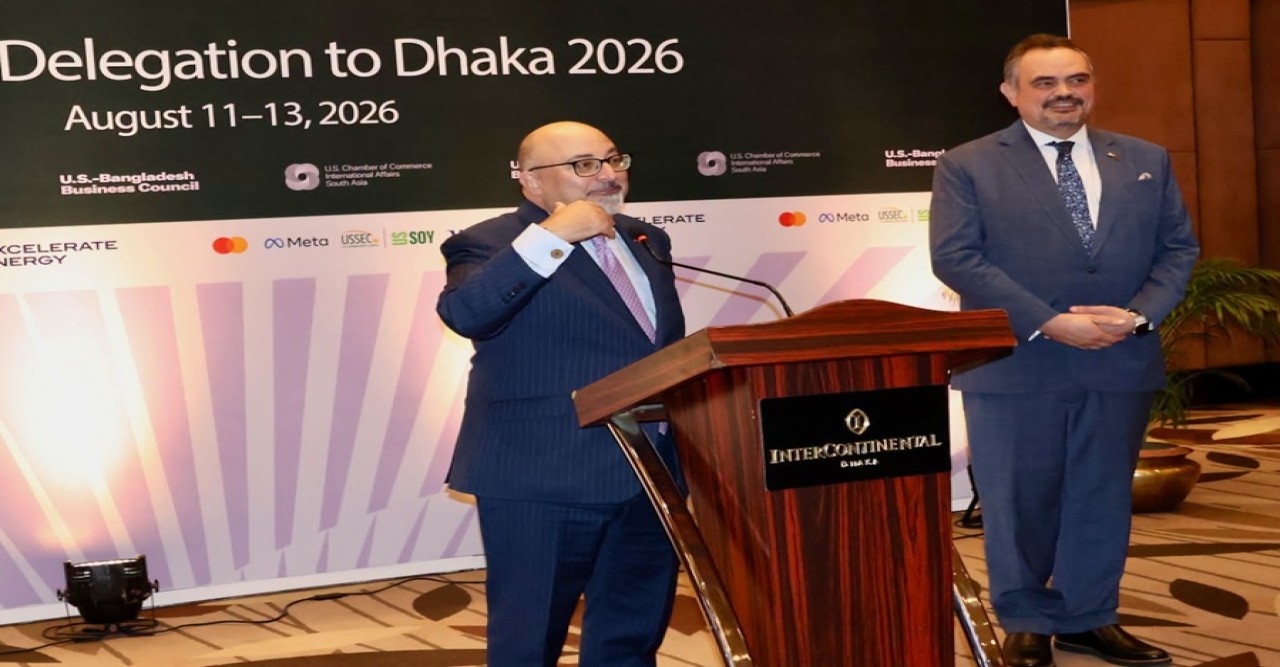
Shibbir Ahmed: A high-level U.S. business delegation representing 25 American companies has arrived in Dhaka to explore new investment opportunities in Bangladesh, highlighting growing interest among leading U.S. businesses in the country’s energy, technology, agriculture, and financial sectors.
The executive delegation of the U.S.-Bangladesh Business Council (USBBC) arrived in Dhaka on August 11 and participated in meetings and business programs through August 13. Representatives of major American companies, including Chevron, Excelerate Energy, Visa, and Mastercard, were among those taking part in the visit.
The delegation’s visit is being viewed as an important initiative to deepen the longstanding economic relationship between Bangladesh and the United States, which spans more than five decades.
U.S. Ambassador to Bangladesh Brent T. Christensen welcomed the delegation to Dhaka, saying that leading American companies from the energy, technology, agriculture, and finance sectors had come to explore opportunities and build on more than 50 years of U.S.-Bangladesh economic ties.
Focus on Trade and Investment
The delegation’s primary objective is to explore new investment opportunities and potential business partnerships in Bangladesh.
Energy, infrastructure, technology, digital services, healthcare, agriculture, and financial services are among the sectors attracting particular attention from U.S. businesses.
During meetings with Bangladeshi officials, representatives of the U.S. business community discussed ways to expand bilateral trade and investment and strengthen private-sector cooperation.
The delegation also met with Bangladesh’s Foreign Affairs Adviser Humayun Kabir, with discussions focusing on expanding economic relations and creating greater opportunities for U.S. investment in areas including industry, infrastructure, energy, technology, the digital economy, and healthcare.
Atul Keshap, President of the U.S.-Bangladesh Business Council and a former U.S. ambassador, also emphasized the potential for expanding business cooperation between the two countries.
$5 Billion Investment Goal
The U.S. business delegation’s visit comes as the American Chamber of Commerce in Bangladesh (AmCham) has set an ambitious target for mobilizing additional U.S. investment in Bangladesh.
AmCham has said it aims to help mobilize up to $5 billion in additional U.S. investment over the next five years, involving existing member companies as well as potential new American investors.
The investment target was discussed during an August 11 meeting between Prime Minister Tarique Rahman and an AmCham executive delegation.
The discussions also covered measures to improve Bangladesh’s investment climate, including reforms related to taxation, value-added tax, customs procedures, and other issues affecting businesses.
AmCham has said that its member companies have already invested more than $5 billion in Bangladesh. If the new investment target is achieved, the U.S. corporate presence in Bangladesh could expand significantly.
Energy and Technology Attract Strong Interest
The participation of companies such as Chevron and Excelerate Energy underscores the importance of Bangladesh’s energy sector to American investors.
Bangladesh has growing demand for reliable energy and infrastructure, creating potential opportunities for U.S. companies with expertise in energy production, liquefied natural gas, infrastructure, and related technologies.
The participation of global financial technology companies such as Visa and Mastercard also points to growing interest in Bangladesh’s rapidly developing digital economy and financial-services sector.
With a large population, expanding consumer market, growing digital economy, and increasing demand for infrastructure and energy, Bangladesh offers a range of potential opportunities for international investors.
New Opportunities Following the Trade Agreement
The U.S. business delegation’s visit comes several months after Bangladesh and the United States signed the Agreement on Reciprocal Trade earlier this year. The agreement created a new framework for expanding bilateral trade and improving market access between the two countries.
Against this backdrop, the business delegation’s visit can be viewed as more than a routine commercial engagement. It represents an effort to translate recent progress in government-to-government economic relations into concrete investment, business partnerships, and private-sector cooperation.
For Bangladesh, increased U.S. investment could bring more than capital. New investments could also contribute to technology transfer, skills development, employment generation, and greater integration into global supply chains.
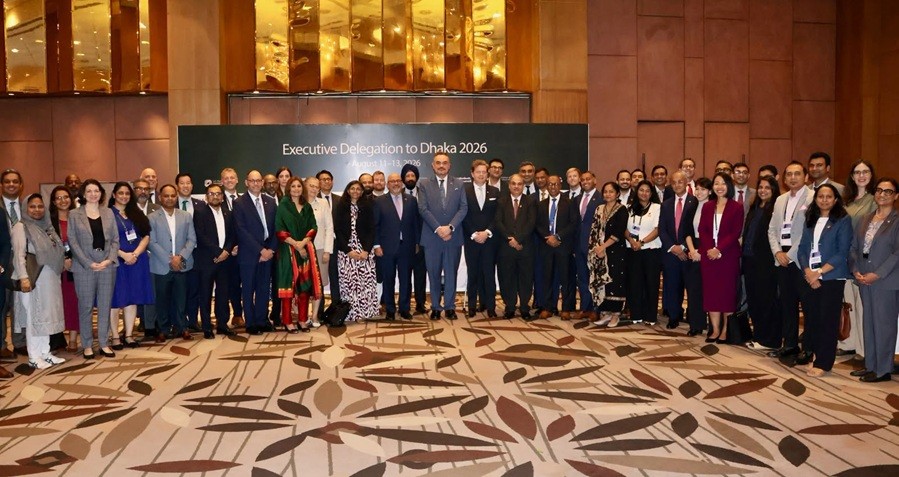
For American companies, Bangladesh represents a large and evolving South Asian market with opportunities in manufacturing, energy, digital services, financial technology, infrastructure, and consumer-oriented businesses.
A New Chapter in Economic Relations?
For more than five decades, Bangladesh-U.S. economic relations have been strongly associated with trade, particularly Bangladesh’s ready-made garment exports to the American market. Recent developments, however, suggest that the economic relationship could be entering a broader phase.
The visit by U.S. Special Envoy Sergio Gor to Bangladesh earlier this month, followed by the arrival of the high-level U.S. business delegation and AmCham’s $5 billion investment target, indicates growing engagement not only between the two governments but also between the private sectors of both countries.
The challenge now will be turning growing investor interest into actual projects. To attract and retain more U.S. investment, Bangladesh will need to maintain policy stability, improve transparency, streamline regulatory procedures, strengthen infrastructure, and ensure a more predictable business environment.
The latest U.S. business delegation’s visit therefore represents both an opportunity and a test for Bangladesh. Whether the growing interest of American companies can be converted into long-term investment, new jobs, technology partnerships, and expanded trade will be an important measure of the next phase of Bangladesh-U.S. economic relations.