
Bangladesh-U.S. Relations Gain New Momentum as Washington Deepens Economic and Strategic Engagement
Shibbir Ahmed প্রকাশিত: ১৮ আগস্ট, ২০২৬, ০৭:০৮ এএম
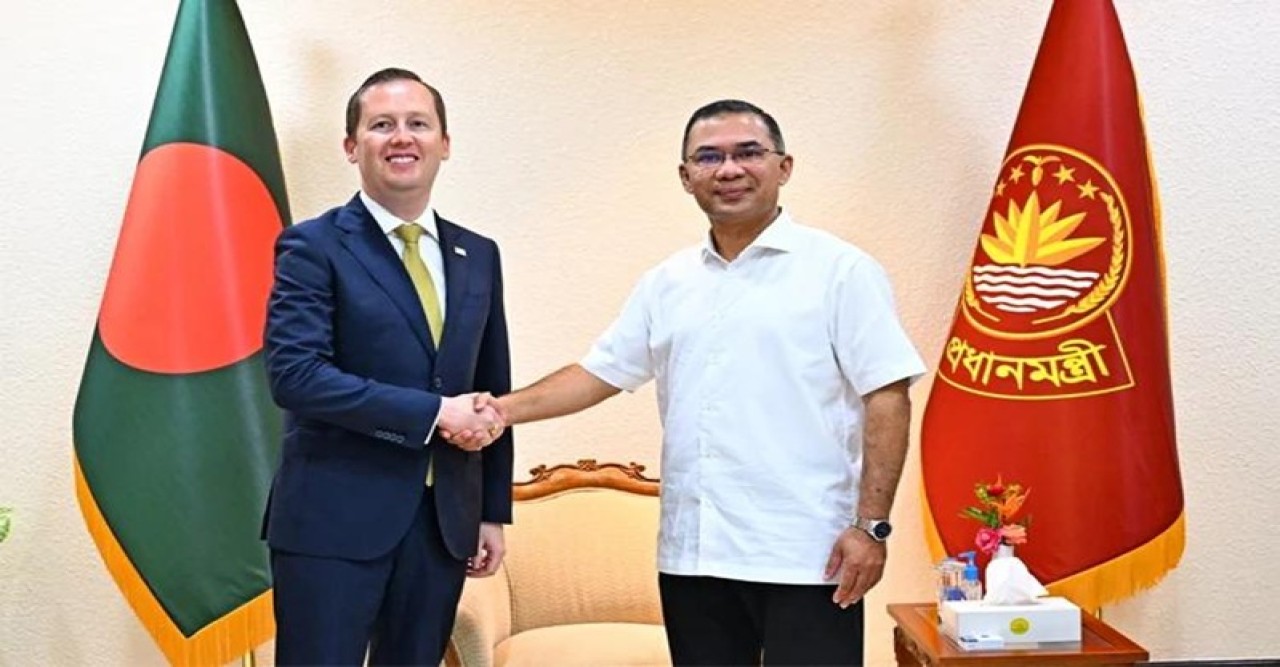
Shibbir Ahmed, Washington, D.C.: Bangladesh-U.S. bilateral relations appear to be entering a new phase, with growing engagement on trade and investment alongside broader discussions on strategic cooperation, regional security, and the Rohingya crisis. The two countries’ trade agreement earlier this year and the recent visit to Bangladesh by U.S. Special Envoy for South and Central Asia Sergio Gor have brought renewed attention to the economic and strategic dimensions of the relationship.
Gor visited Bangladesh from July 30 to August 1. Following the visit, the U.S. Embassy in Dhaka said the trip underscored the breadth and depth of the Bangladesh-U.S. relationship and reaffirmed Washington’s commitment to strengthening bilateral strategic and economic ties.
Renewed Interest in Investment
During a meeting with Sergio Gor, Bangladesh Prime Minister Tarique Rahman called for greater U.S. investment and stronger economic engagement between the two countries. The discussions covered trade, investment, the Rohingya crisis, and a range of issues of mutual interest.
Gor expressed a positive assessment of Bangladesh’s political and economic stability. He pointed to recent positive developments in the country and suggested that changes in the U.S. travel advisory could send a favorable message to American investors about Bangladesh as an investment destination.
The two sides also discussed potential U.S. investment in Bangladesh and opportunities for financing through the U.S. International Development Finance Corporation (DFC). The possibility of a future visit to Bangladesh by a delegation from the U.S.-Bangladesh Business Council was also discussed.
If these initiatives translate into concrete projects, they could expand opportunities for U.S. companies in areas such as infrastructure, energy, technology, manufacturing, and other emerging sectors.
A New Framework for Trade Relations
One of the most significant recent developments in Bangladesh-U.S. economic relations has been the signing of the Agreement on Reciprocal Trade (ART) earlier this year.
Signed on February 9, 2026, the agreement seeks to expand market access and provide a new framework for bilateral trade. According to information from the Office of the U.S. Trade Representative, Bangladesh has committed to providing various market-access benefits for U.S. industrial and agricultural products, including machinery, medical equipment, information and communications technology products, energy-related products, and agricultural goods.
For Bangladesh, access to the U.S. market, export opportunities, and increased American investment remain important economic priorities. Against this backdrop, Gor’s visit can also be viewed as part of the broader effort to translate the commitments of the February trade agreement into deeper commercial and investment ties.
Strategic Importance Beyond Economics
Bangladesh’s geographic position also adds a strategic dimension to its relationship with the United States. Located along the Bay of Bengal and within the broader Indo-Pacific region, Bangladesh has increasing economic and geopolitical significance.
During Gor’s visit, discussions extended beyond trade and investment to issues related to regional cooperation and security. There are also opportunities for expanding bilateral cooperation in areas such as technology, investment, and security.
Recent international analyses have highlighted the growing strategic engagement between Washington and Dhaka. Bangladesh’s expanding economic relationship with China, changing dynamics with India, and the broader competition among major powers in the Bay of Bengal have all contributed to increased international attention toward Bangladesh.
However, viewing Bangladesh-U.S. relations solely through the lens of competition with China or India would overlook the broader interests shaping the bilateral relationship. Trade, investment, security, technology, and humanitarian cooperation all have their own significance in the relationship.
Rohingya Crisis Remains a Major Area of Cooperation
The Rohingya crisis remains another important pillar of Bangladesh-U.S. relations. During his Bangladesh visit, Sergio Gor visited a Rohingya refugee camp in Ukhia, Cox’s Bazar.
Rohingya representatives called for continued international support for a safe, voluntary, sustainable, and dignified repatriation process.
Bangladesh has hosted a large Rohingya refugee population since hundreds of thousands fled violence in Myanmar. The country has repeatedly sought stronger international support for humanitarian assistance and a sustainable solution to the crisis.
The United States remains an important humanitarian partner for Bangladesh on the Rohingya issue. As a result, humanitarian cooperation continues to complement the broader economic and strategic relationship between the two countries.
Why Bangladesh Matters More to Washington
Bangladesh is one of South Asia’s major economies, with a large consumer market and a substantial workforce. Its manufacturing base, particularly the ready-made garment sector, along with its growing services and technology sectors, offers opportunities for foreign investors.
For the United States, Bangladesh is an important trading partner and a potentially significant market for American companies. For Bangladesh, the United States remains one of its most important export destinations.
This creates a degree of economic interdependence between the two countries. Washington has an interest in expanding trade and investment opportunities in Bangladesh, while Dhaka is seeking greater access to the U.S. market, more American investment, technology cooperation, and stronger economic partnerships.
Bangladesh’s location along the Bay of Bengal and its role in the wider Indo-Pacific further enhance its importance.
Implementation Will Be the Real Test
Despite the recent diplomatic momentum, the key question is whether political engagement and economic agreements will translate into measurable long-term results.
The implementation of commitments under the Reciprocal Trade Agreement, the level of interest shown by U.S. companies in new investments in Bangladesh, and the future trajectory of bilateral trade will help determine the next phase of the relationship.
At the same time, Bangladesh will need to maintain a balanced foreign policy while protecting its economic interests and managing relations with major powers, including the United States, China, and India.
Recent developments suggest that Bangladesh-U.S. relations are no longer limited to traditional trade or garment exports. Trade, investment, technology, humanitarian cooperation, regional security, and Indo-Pacific geopolitics are increasingly shaping a broader and more multidimensional partnership.
Sergio Gor’s visit and the Reciprocal Trade Agreement signed earlier this year are two significant indicators of this evolving relationship. The next challenge will be turning the current diplomatic and economic momentum into sustained, mutually beneficial partnership.