
UN-Led Global Debt Framework Urged to Safeguard Investments in Women and Children
Shibbir Ahmed প্রকাশিত: ১৭ জুলাই, ২০২৬, ১০:০৮ পিএম
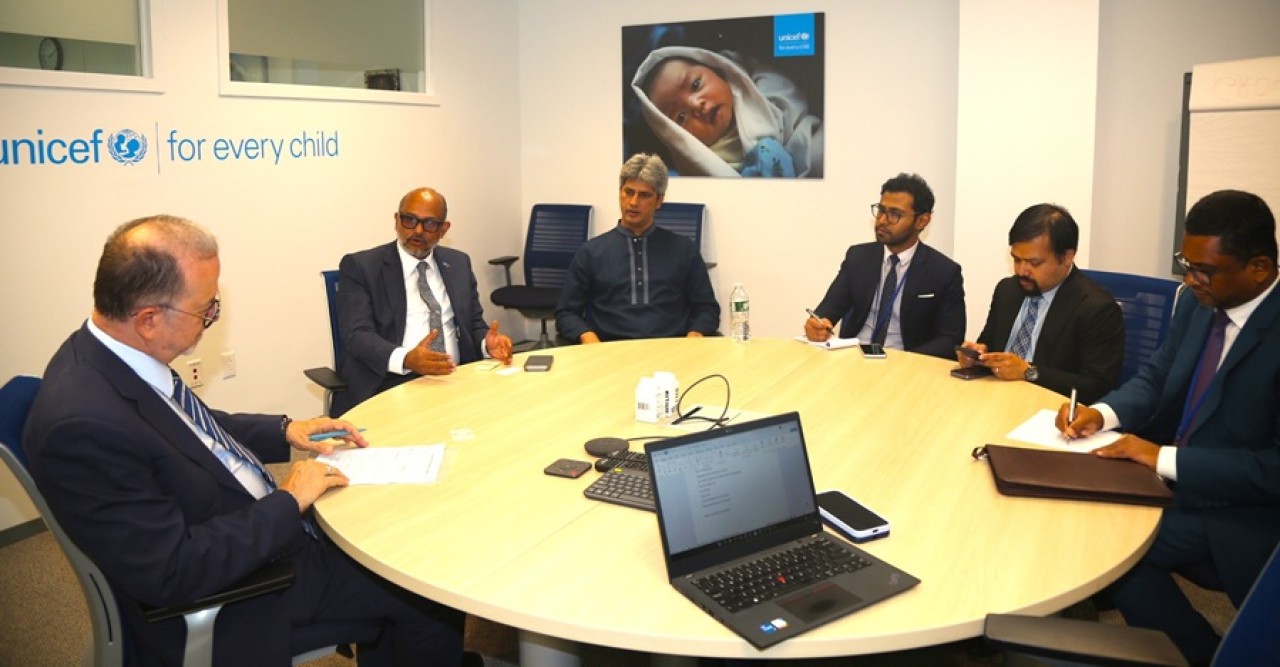
Shibbir Ahmed, United Nations, New York: Prime Minister's Adviser on Economy and Planning, Dr. Rashed Al Mahmud Titumir, has called for the establishment of a United Nations-led international mechanism to help developing countries address mounting debt challenges through debt restructuring, debt relief, debt suspension, and sustainable long-term debt solutions.
He said such a global framework is essential to enable developing countries to continue investing in the welfare of women and children, education, healthcare, and social protection while maintaining progress toward achieving the Sustainable Development Goals (SDGs).
Dr. Titumir made the remarks during a meeting with UNICEF Deputy Executive Director for Humanitarian Action and Supply Operations, Ted Chaiban, at UNICEF Headquarters in New York. Planning State Minister Jonayed Saki also attended the meeting.
Highlighting the growing fiscal pressures facing Bangladesh, Dr. Titumir said the ongoing Middle East crisis has driven up global energy prices, disrupted international supply chains, and intensified debt burdens, significantly constraining the country's revenue capacity.
Despite these challenges, he reaffirmed the government's commitment to building a democratic welfare state under its "Bangladesh First" vision, emphasizing that protecting women, children, and other vulnerable groups remains a top national priority.
Dr. Titumir said the new government is placing women at the center of its development strategy by building a universal, life-cycle-based social protection system. As part of this initiative, the proposed "Family Card" program will provide continuous support to women-led households throughout different stages of life, including pregnancy, child development, education, disability, and old age.
Planning State Minister Jonayed Saki stressed the importance of developing an integrated and reliable national data system. He outlined the government's proposed "One Child, One Card, One Number, One Wallet" strategy, which aims to streamline birth registration, school enrollment, and access to government services through a unified digital platform.
Saki also sought UNICEF's support in strengthening the quality of education by expanding digital training opportunities for teachers and promoting the use of modern learning materials. In addition, he underscored the importance of multilingual education, sports, cultural activities, museum visits, and extracurricular programs in fostering children's holistic development.
UNICEF Deputy Executive Director Ted Chaiban congratulated Bangladesh's newly elected government and welcomed the country's election to the presidency of the 81st session of the United Nations General Assembly.
He commended Bangladesh for prioritizing the welfare of women, children, and other vulnerable communities despite limited fiscal resources. Chaiban reaffirmed UNICEF's continued commitment to supporting Bangladesh in the areas of education, early childhood development, nutrition, social protection, teacher capacity building, and strengthening child-centered information systems.