


Shibbir Ahmed, United Nations, New York: Nearly 94 percent of Gaza’s 2.1 million residents are now in urgent need of shelter, according to the United Nations. At the same time, Israeli gunfire and airstrikes continue across Gaza. In southern Lebanon, Israeli airstrikes, destruction of infrastructure and restrictions on movement are also continuing, according to the UN peacekeeping mission.
According to UN humanitarian agencies and their partners, more than four out of five families in Gaza are currently living in critical or catastrophic conditions. Severe shortages of fuel, energy and essential household items are making daily life increasingly difficult. UN spokesperson Stéphane Dujarric said these restrictions are affecting people’s ability to sleep, cook, wash, store food and water, maintain adequate lighting, and cope with extreme heat and cold.
Two-Thirds of Families Living in Tents
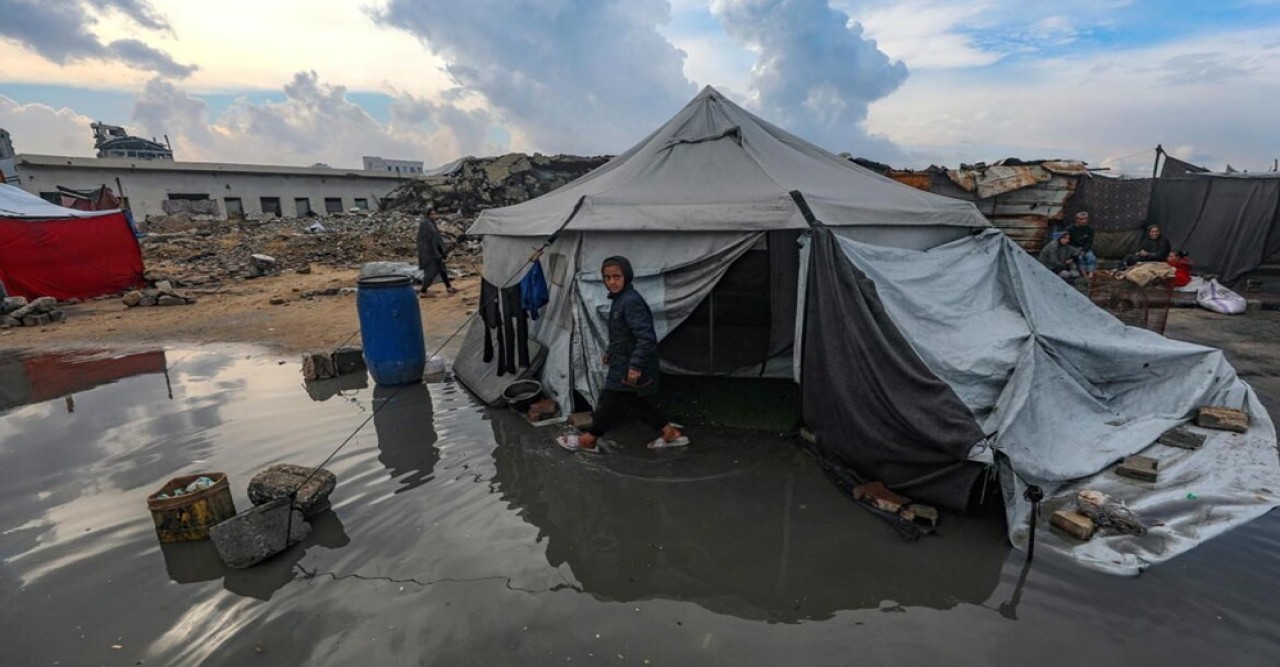
According to the UN Office for the Coordination of Humanitarian Affairs, nearly two-thirds of families in Gaza are living in tents or makeshift shelters. These shelters are not designed for long-term habitation and deteriorate rapidly in harsh weather conditions.
More than 70 percent of families experienced flooding during the previous winter season. As the cold and rainy season approaches, humanitarian agencies are working to provide families with more durable shelter. However, Israeli restrictions on the entry of construction materials and essential equipment, along with funding shortages, remain major obstacles. UN partners estimate that approximately $562 million is needed to improve living conditions for people in Gaza.
50 Bodies Recovered from Rubble Buried
Reports of Palestinian civilians being killed or injured in Israeli airstrikes, shelling and gunfire in Gaza continue, including children. On Thursday, the remains of 50 people recovered from beneath the rubble were buried, including 19 children. According to the United Nations, they were killed more than two years ago.
Efforts to remove rubble and recover bodies are also being hampered by various restrictions. Access to heavy machinery, spare parts, lubricants and other essential equipment remains limited, while access to large areas of the Gaza Strip is also restricted. The UN spokesperson said civilians should never be targeted or used for military purposes.
Campaign to Combat Rodents and Disease
The accumulation of rubble and deteriorating sanitary conditions have also contributed to an increase in rodents and other pests across Gaza. To address the problem, the United Nations Development Programme (UNDP) has intensified pest-control operations. Since May, the programme has reached more than 3,250 high-risk sites, including displacement shelters, markets and hospitals.
Israeli Attacks Continue in Lebanon
Meanwhile, the UN Interim Force in Lebanon (UNIFIL) has reported continued Israeli military activity in southern Lebanon. From Monday to Wednesday, UNIFIL observed 86 airspace violations, nine airstrikes and 265 projectiles launched by Israeli forces. Nearly 30 drone-related activities were also detected, including reconnaissance flights, kinetic strikes and suicide drones.
Israeli forces have also continued demolishing and destroying infrastructure and other facilities, according to UNIFIL. Restrictions on movement have also continued. Seven such incidents have been recorded so far this week, causing UN patrols, convoys and humanitarian movements to be delayed, rerouted or forced to turn back.
UN Assistance in Gaza and Lebanon
Despite the worsening crisis, various UN agencies continue to provide humanitarian assistance in Gaza and Lebanon. In Gaza, the UN agency for Palestinian refugees, UNRWA, is opening a new temporary learning space. UNICEF is providing essential assistance to vulnerable families and supporting educational spaces and the continuity of healthcare services in the West Bank.
The World Food Programme (WFP) is reaching approximately 1.5 million people in Gaza with food parcels, wheat flour, bread, hot meals, nutritious food for children, nutrition services and cash assistance.
The UN Development Programme has also issued new guidelines on debris removal and recycling in Gaza. The initiative aims to reopen roads, prepare sites for shelters and restore access to hospitals and humanitarian service points. The United Nations warns that as the humanitarian crisis in Gaza deepens, shortages of shelter, fuel and basic necessities could make conditions even more severe as the winter season approaches.