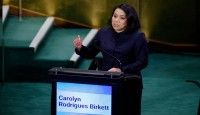




Bangladesh Parliament on Wednesday approved a new law that formally backs an earlier decision by the interim administration led by Muhammad Yunus to dissolve the political party of former Prime Minister Sheikh Hasina, the Awami League. Presenting the bill in the House, Home Minister Salahuddin Ahmed said the legislation relates to banning a “genocidal and terrorist organisation” and serves as an amendment to the country’s existing Anti-Terrorism Act, though he did not explicitly mention the Awami League during his remarks.
Ahmed stated that the law would maintain the suspension of the Awami League’s registration with the Election Commission and enable legal proceedings against the party over allegations of involvement in “genocide.”
Lawmakers from the ruling bench of Prime Minister Tarique Rahman’s Bangladesh Nationalist Party passed the bill through a voice vote soon after it was tabled. The legislation retains the ordinance introduced earlier by the interim government while modifying provisions of the Anti-Terrorism Act.
The interim administration under Yunus had earlier revised the Anti-Terrorism Act to include provisions allowing the government to dissolve any individual or organisation found to be engaged in terrorist activities. Following the ordinance, the government issued an executive order banning the Awami League— the party that led Bangladesh’s 1971 Liberation War against Pakistan— and barred it from participating in elections.
The new law also prohibits the publication or distribution of statements issued by or supporting a banned organisation. It further bans propaganda in favour of such groups through mainstream or social media, as well as activities like rallies, processions, or public speeches advocating them.
During the debate, Shafikur Rahman, leader of the main opposition Jamaat-e-Islami, requested more time to examine the bill, arguing that lawmakers had received the document only minutes before the discussion began. He said the sensitive nature of the legislation required adequate time for members to read and understand it.
Responding to the request, Ahmed said the opposition leader should remember that Jamaat-e-Islami and its allies in the student-backed National Citizen Party, formed last year with Yunus’ support, had led a protest movement in 2024. According to the minister, those developments had resulted in the Awami League’s activities being banned under the amended Anti-Terrorism Act.
Meanwhile, officials from the United Nations, including the Special Rapporteur on Human Rights and the head of the UN Human Rights Office, had earlier criticised the Yunus administration’s decision to outlaw the Awami League, describing it as a restriction on the freedoms of association and peaceful assembly.